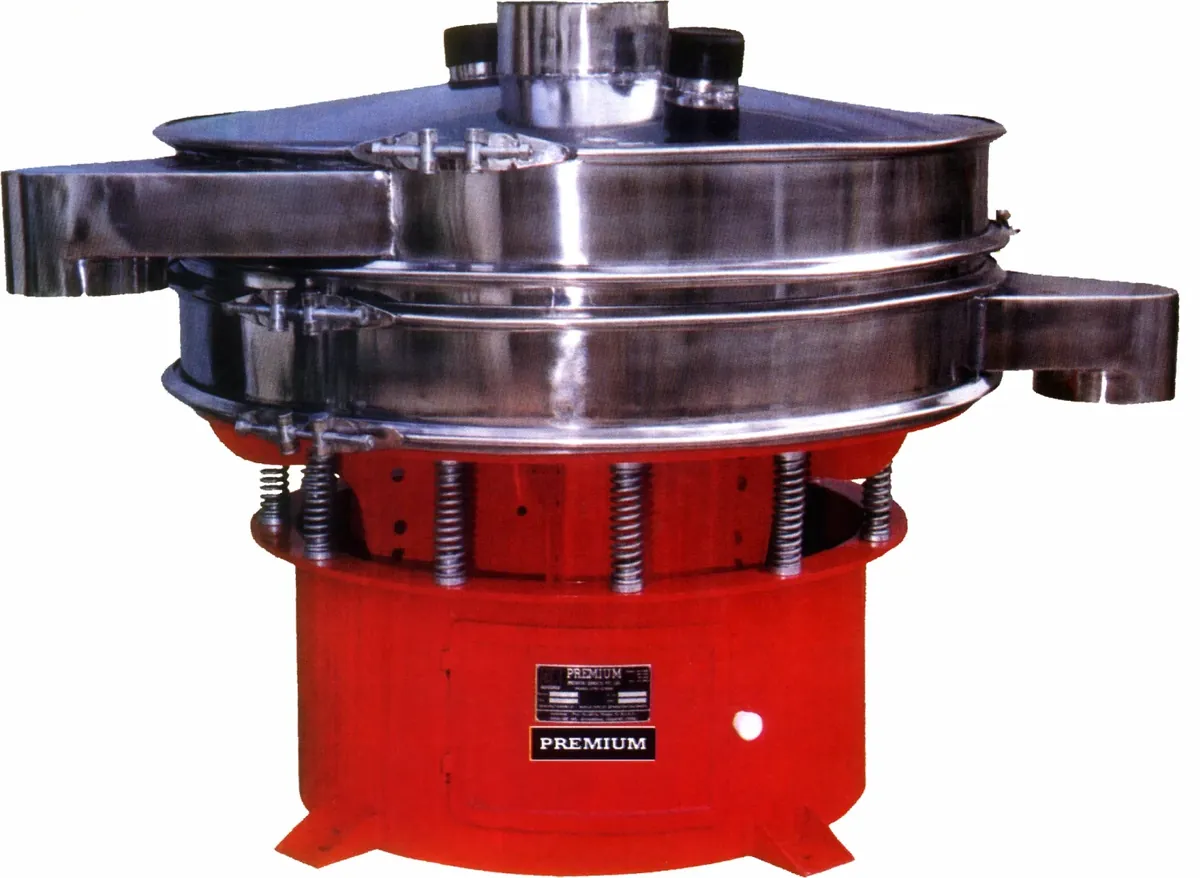
Operating principle
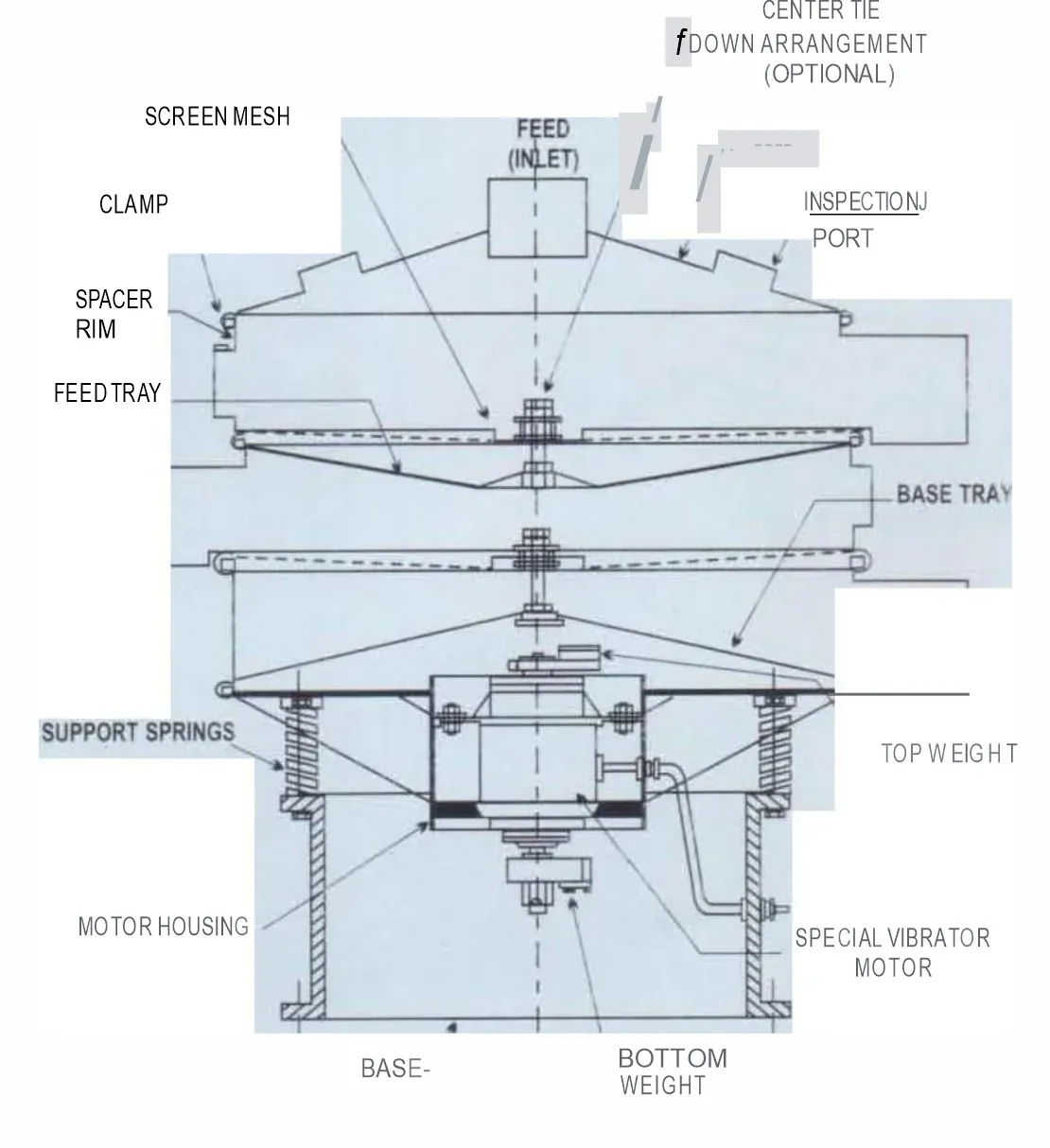
A vertically mounted vibro motor carries eccentric weights at both ends of its shaft. The top weight produces horizontal vibration; the bottom weight produces vertical and tilting motion. Together they move material in a horizontal loop across the screen, stirring, dispersing and stratifying it. Changing the lead angle between the weights changes the spiral screening pattern to suit each application.
Advantages
- Wide range of applications
- Low power usage
- High throughput per unit
- Optimised screen area
- Minimal mounting structure
- Wire mesh screens, top cover and multi-deck screens for different spices
Technical specifications
| Model | Screen dia (mm) | Screen area (cm²) | Motor (HP) | Lowest discharge height (mm) | Total height incl. cover (mm) |
|---|---|---|---|---|---|
| PVS-24 | 610 | 2920 | 0.5–1.0 | 425 | 1020 |
| PVS-36 | 915 | 6576 | 0.75–1.5 | 560 | 1170 |
| PVS-48 | 1220 | 11680 | 1.5–2.0 | 560 | 1170 |
| PVS-60 | 1525 | 18265 | 2.0–3.0 | 560 | 1330 |
| PVS-72 | 1830 | 26290 | 2.0–3.0 | 560 | 1330 |
| PVS-84 | 2133 | 35628 | 5.0 | 900 | 1600 |
| PVS-96 | 2400 | — | 5.0 | 900 | 1600 |
Specifications and design are subject to change without notice for improvement. Capacity depends on material, feed size, moisture and required fineness.
Applications
Food, chemicals, pharmaceuticals, ceramics, plastics and abrasives; final grading of chilli and turmeric powder; flour banding in grain milling for distilleries.
Gallery
Frequently Asked Questions
Why sieve after pulverizing?
Sieving guarantees the final mesh and removes fibre or oversize, which can be returned to the mill. For chilli powder it is standard practice.