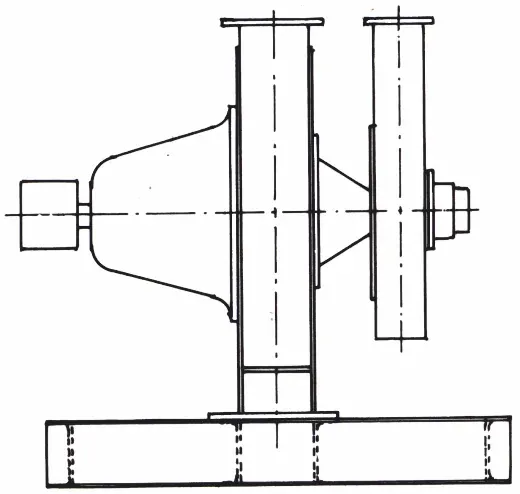
Overview and design
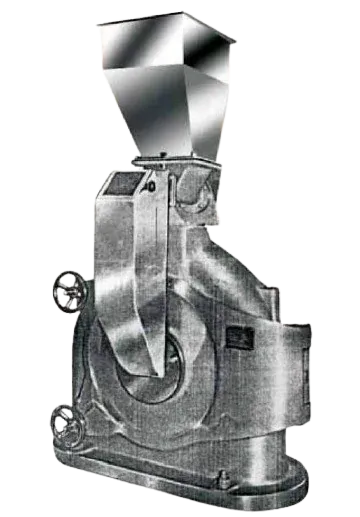
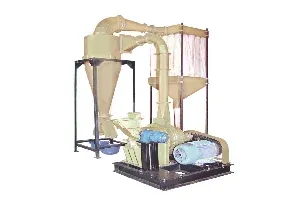
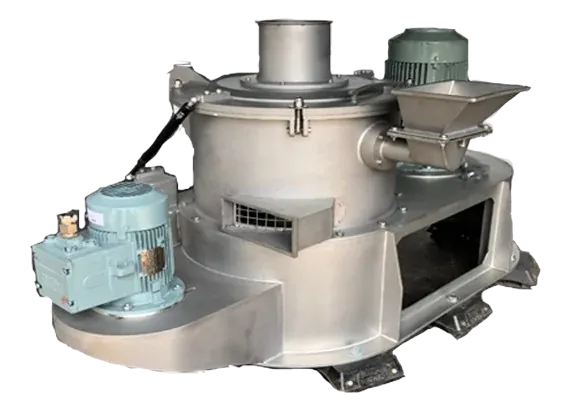
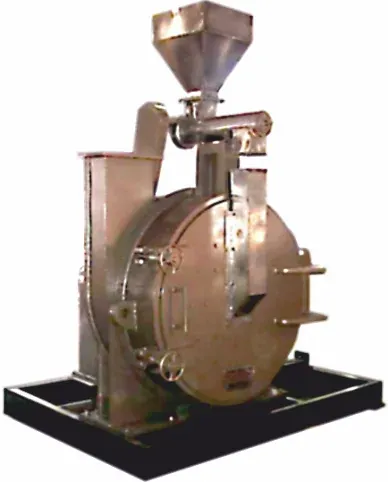
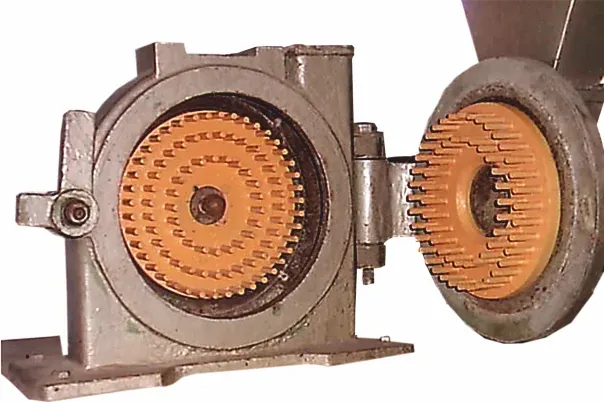
A pin mill reduces material by impact between pins on a high-speed rotating disc and pins on a stationary ring. Premium pin mills are optimised for medium-fine and coarse grinding of medium-hard, fibrous and free-flowing feedstocks; the hole size of the screen drum is chosen to give the required final mesh. A variable-speed screw feeder provides precise feed control. For high throughput, pneumatic systems with blower, cyclone and fabric dust collector are used, and the product is often moved on by rotary valve and screw conveyor.
Standard installation
- Appropriately sized hopper and screw feeder
- Magnet for metal removal
- Rotating grinding plates, stationary rings and screen drum
- Discharge outlet; main shaft on high-load bearings
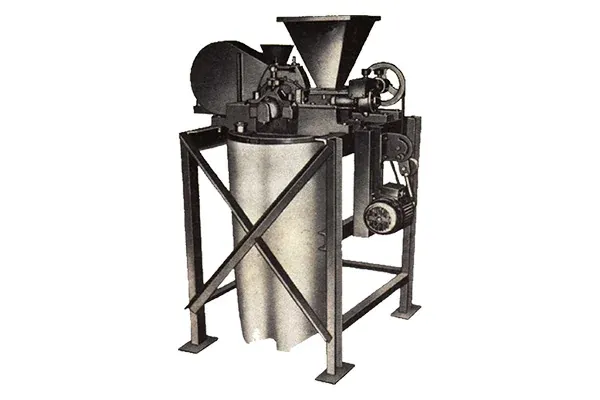
- Optional mounting on platforms or process structures
- Mechanical or pneumatic output transfer
Technical specifications
| Model | Dia (mm) | HP | RPM | Space L×B×H (mm) | Capacity (kg/hr) |
|---|---|---|---|---|---|
| PPM-30 | 750 | 40 | 1000/2000 | 2200×2000×1800 | 500–5,000 |
| PPM-36 | 900 | 75 | 800/1600 | 2400×2300×2000 | 800–8,000 |
| PPM-42 | 1000 | 100 | 750/1800 | 2600×2600×2200 | 1,000–10,000 |
Capacity range reflects the very wide spread between materials and fineness levels. Specifications and design are subject to change without notice for improvement. Capacity depends on material, feed size, moisture and required fineness.
Pin mill variants
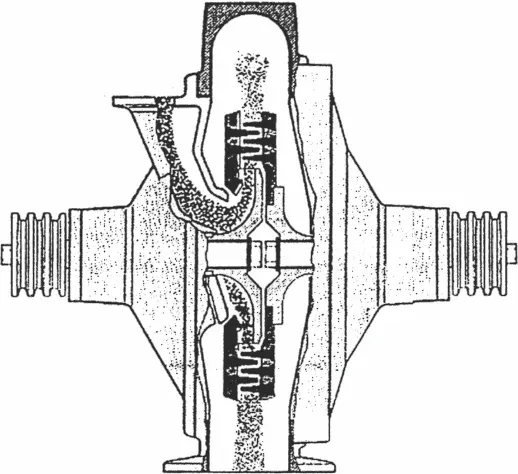
- Pin whizzer mill – whizzer cone and blade with the blower on the same shaft; product is carried pneumatically to the cyclone.
- Pin classifier mill – in-built classification with gap plate and classifier fan; supplied with cyclone, dust collector or pulse air-jet dust collector.
- Round-pin mill – stator and rotor discs fitted with riveted round pins; number and pitch matched to grindability and fineness.
- Double-rotation pin mill – both discs rotate (same or opposite direction) on two motors; screenless and capable of very fine grinding.
- Pneumatic discharge pin mill – blower, cyclone with rotary airlock and fabric bag dust collector.
Advantages
- Higher throughput than conventional mills
- Narrow particle size distribution
- Cooler, smoother final product
- Lower power consumption and compact footprint
- Handles feeds with higher fat and moisture content
- Stable, low-vibration build
Typical uses
Pin mills are the go-to choice for sugar (up to about 300 mesh / 50 µm for biscuit, dairy and Ayurvedic use), dry salt milling in salt refineries, starches, flours and fatty food ingredients that would smear in a screen mill.
Gallery
Frequently Asked Questions
What is a pin mill pulverizer used for?
Fine, uniform grinding of soft to medium-hard materials, especially sugar, salt, starch, spices and food ingredients with some fat or moisture.
Pin mill vs hammer mill — which is better?
A pin mill gives a narrower particle size band and a cooler, finer product; a hammer mill handles coarser, tougher and more fibrous feed at higher tonnage. Many plants use a hammer mill for pre-breaking and a pin mill for finishing. Read our comparison guide.
Do you make stainless steel pin mills?
Yes, pin mills are built in MS or SS construction.