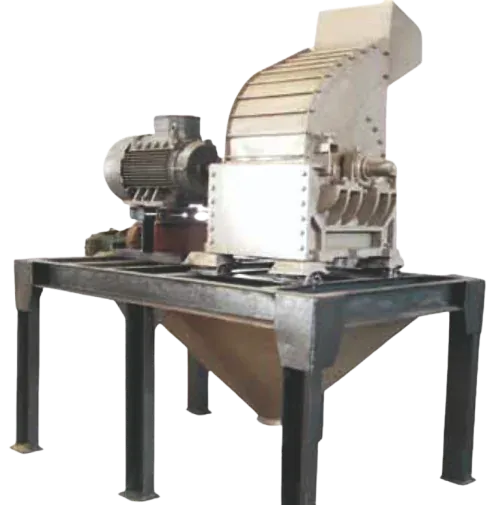
How the Miracle Mill works
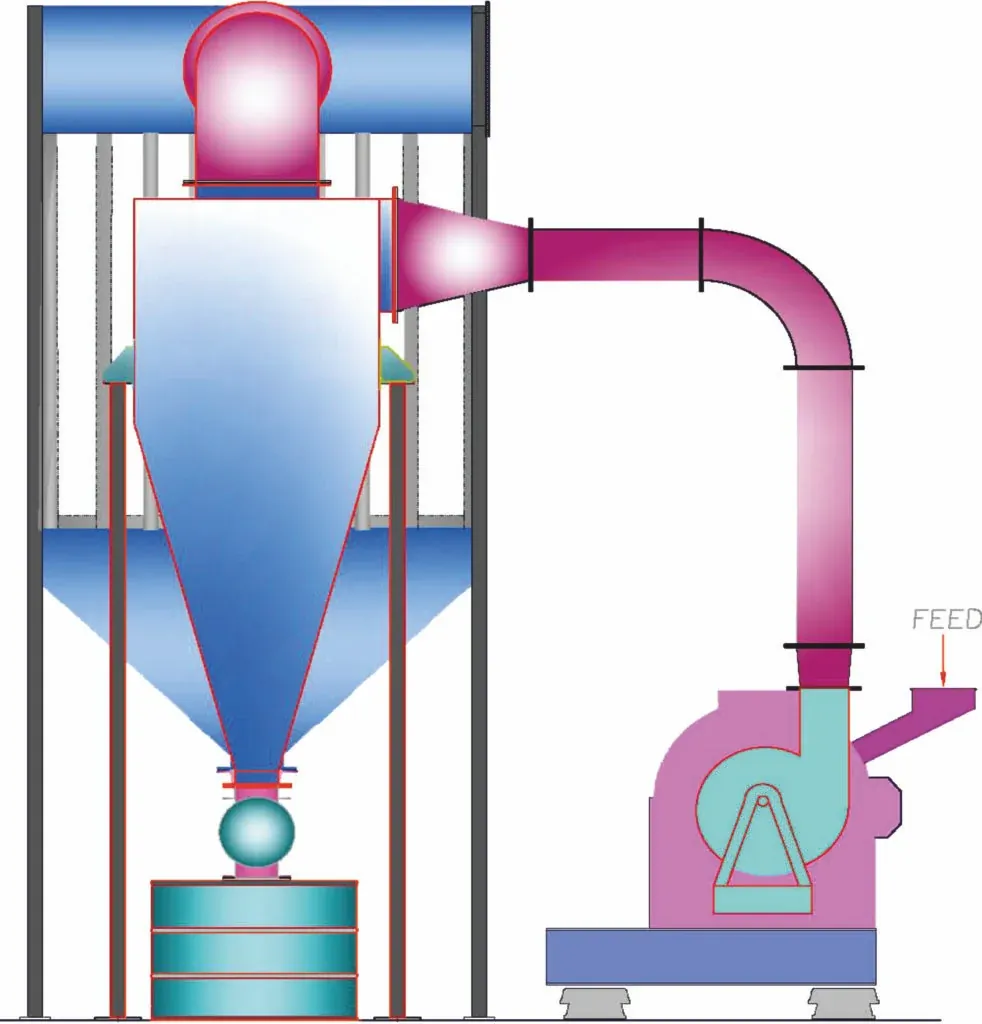
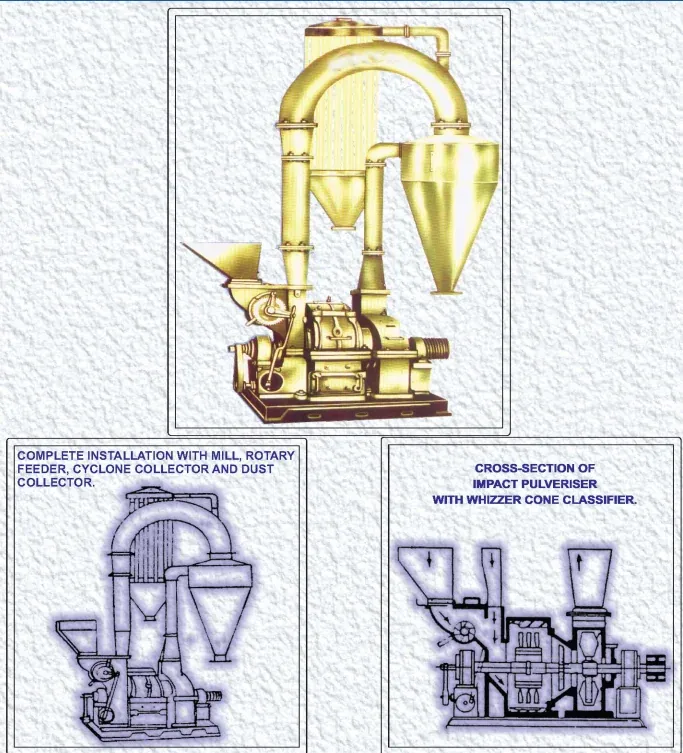
Material is fed into the grinding chamber, where rows of high-speed hammers break it down in mid-air. A suction fan draws the pulverized particles towards a sieve at the base of the chamber; whatever passes the screen is conveyed pneumatically to a cyclone collector, where it separates from the air stream and discharges. Screen perforation and hammer tip speed decide the fineness of the end product.
Because the air stream continuously carries heat away from the chamber, the Miracle Mill grinds cool — an important reason it is preferred for spices where colour, aroma and volatile oil must be retained.
Design and construction
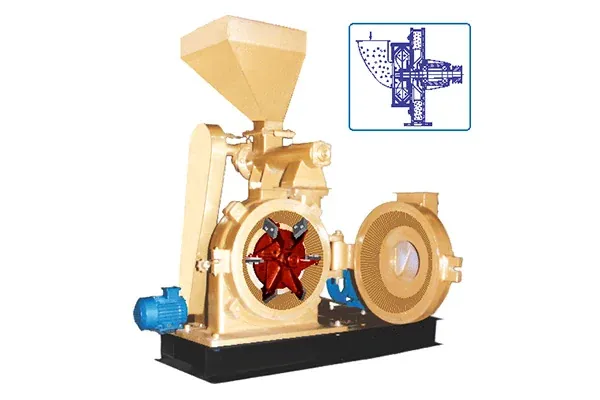
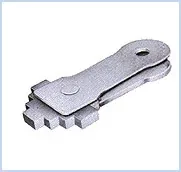
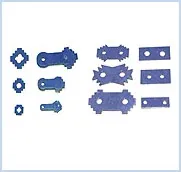
- Star-type, double-ended hammers with multiple working edges, made from press-hardened steel. Manganese-steel hammers are available for abrasive or tough materials.
- Four rows of hinged hammers that swing back if foreign objects enter, protecting the rotor.
- Strong magnet at the feed intake to stop tramp iron entering the mill.
- Dynamically balanced rotor assembly on a sturdy bare-mill body.
- Hinged hood with lifting mechanism for quick screen changes and hammer re-arrangement.
- Direct coupling or V-belt/pulley drive to set the required speed.
- Bottom open type (B.O.T.), co-axial blower (C.A.B.) or independent fan discharge.
- Mild steel (MS), cast iron or stainless steel (SS) contact-part construction.
Series overview
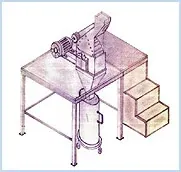
Junior series (300 mm) – three compact sizes for pharmaceuticals, chemicals, spices, grains, tea and sugar with low power needs.
Medium series (400 mm) – for tea dust, cattle and poultry feed, fish meal, spices, lentils, fertilizers, chemicals and minerals.
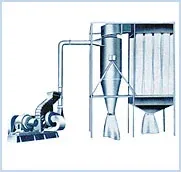
Standard series (600 mm) – the most widely used line, STD-II to STD-V, supplied with co-axial blower, cyclone collector, fabric dust collector and inlet magnet. A “Y” piece and rotary airlock valve give continuous, dust-free bagging.
Super and Super Max series – extra-heavy shafts, split bearing housings and heavy plate construction for continuous bulk processing.
Non-axial blower (NAB) type – a separate blower lets the mill run at lower speed for coarse grinding while still lifting material, in positive-pressure, pneumatic or negative-pressure layouts.
Technical specifications
| Model | Mill dia (mm) | Capacity (kg/hr) | Speed (RPM) | HP – B.O.T. | HP – C.A.B. | Feed opening (mm) | Hammers |
|---|---|---|---|---|---|---|---|
| JR-I | 300 | 50–350 | 4500–5600 | 3 | 5 | 100 | 12 |
| JR-II | 300 | 70–500 | 4500–5600 | 5 | 7.5 | 175 | 24 |
| JR-III | 300 | 90–700 | 4500–5000 | 7.5 | 10 | 250 | 36 |
| MED-II | 400 | 100–1000 | 4000–5000 | 10 | 15 | 270 | 24 |
| MED-III | 400 | 110–1200 | 4000–5000 | 15 | 20 | 385 | 36 |
| MED-IV | 400 | 120–1600 | 4000–5000 | 25 | 30 | 480 | 48 |
| STD-II | 600 | 140–1820 | 2800–3300 | 30 | 40 | 280 | 24 |
| STD-III | 600 | 160–2500 | 2800–3300 | 40 | 50 | 394 | 36 |
| STD-IV | 600 | 190–3200 | 2800–3300 | 50 | 60 | 504 | 48 |
| STD-V | 600 | 600–6000 | 2900–3400 | 60 | 75 | 600 | 60 |
Specifications and design are subject to change without notice for improvement. Capacity depends on material, feed size, moisture and required fineness.
| Model | Mill floor space (mm) | Mill height (mm) | Mill with fan (kg) | Plant space, max L×B×H (m) |
|---|---|---|---|---|
| JR-I / II / III | 660×460 – 660×610 | 710 | 80–115 | 6×3×4 |
| MED-II / III | 1020×920 – 1020×1020 | 1140 | 400–450 | 7.5×3×5.5 |
| MED-IV | 1120×1120 | 1200 | 600 | 8×3×5.5 |
| STD-II | 1120×1380 | 1270 | 600 | 10×3×6 |
| STD-III / IV | 1120×1730 | 1270 | 820 | 10.5×3.5×7.5 |
| STD-V | 1170×2030 | 1450 | 1400 | 11×3.5×8.5 |
Negative pressure system
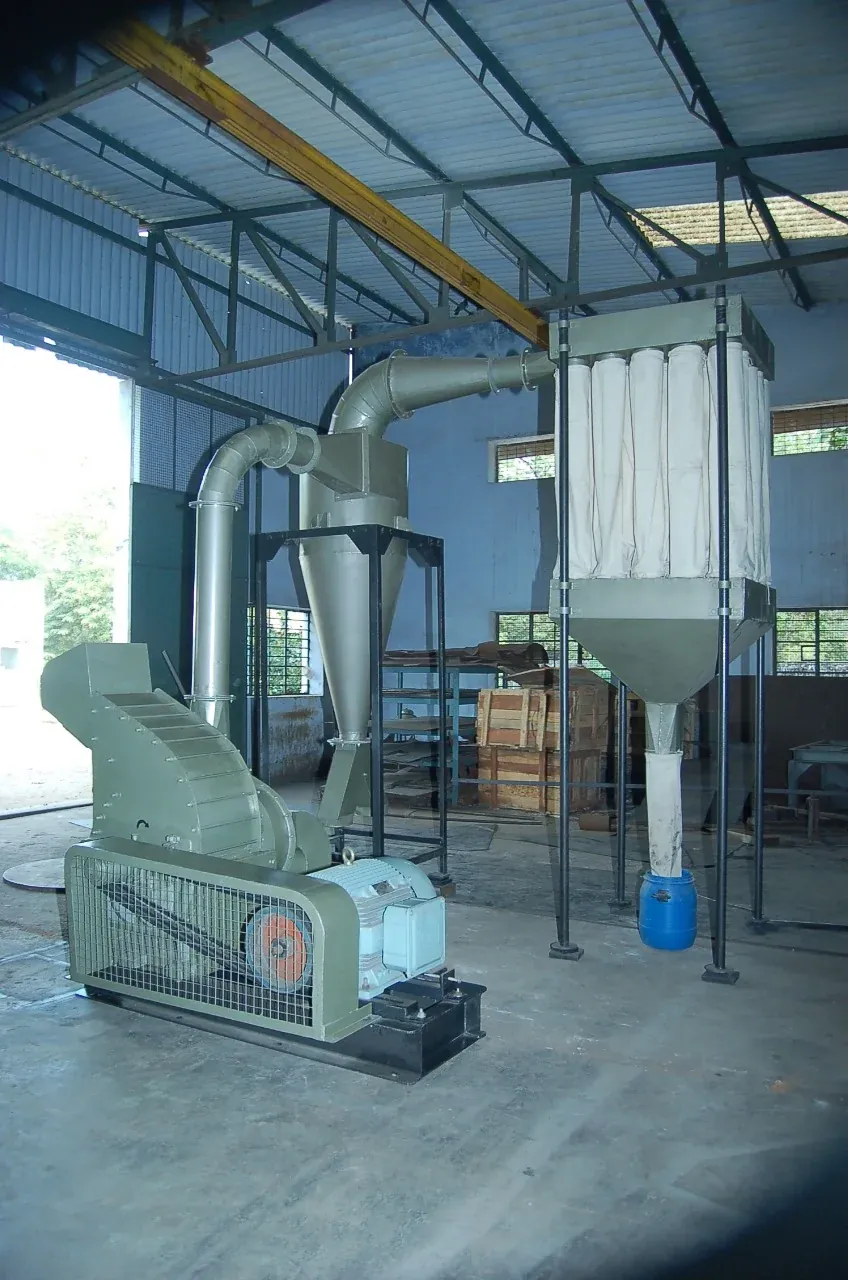
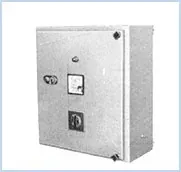
For a completely dust-free installation, material is screw-fed into the Miracle Mill and the powder is collected from the cyclone through an airlock valve fitted with a dual-discharge “Y” piece, so one drum fills while the other is changed. A blower between the cyclone and the fabric dust collector keeps the whole system under negative pressure. A roller conveyor under the cyclone and a wall-mounted control panel with voltmeter and ammeter complete the set-up.
Ancillary equipment
- Fabric dust collector – captures fines as a filter cake builds on the bags.
- Reverse pulse air-jet dust collector – closed type with periodic compressed-air bag cleaning; recommended for very fine, pungent or costly powders.
- Rotary airlock valve under the cyclone for airtight, uniform discharge.
- High-grade steel cyclone separator and anti-vibration mounting pads.
Materials and applications
Red chilli (coarse and fine stages), turmeric (pre-breaking to 3–5 mm), coriander, cumin and curry masalas; tea and tea dust; grains, lentils and pulses; sugar; cattle feed, poultry feed and fish meal; fertilizers, chemicals, pharmaceuticals and minerals. Custom-designed mills are also built for rubber, salt, animal feed and fibrous materials.
See the chilli grinding system and turmeric processing plant for the two-stage flowsheets in which the Miracle Mill is used.
Maintenance tips
- Rotate or reverse the multi-edged star hammers before replacing them — each hammer has several working edges.
- Check the screen for wear or tears whenever you change product; a torn screen shows up immediately as oversize in the powder.
- Keep the inlet magnet clean; tramp iron is the most common cause of hammer and screen damage.
- Shake or pulse-clean dust collector bags regularly so suction (and therefore output) stays constant.
- Clean the mill between different spices if one machine is used as a common masala mill.
Gallery
Frequently Asked Questions
What is the difference between a hammer mill and a pulverizer?
“Pulverizer” is the general term for any machine that reduces solids to powder. A hammer mill is one type of pulverizer that uses swinging hammers and a screen. The Miracle Mill is a hammer mill pulverizer with star-type hammers and pneumatic collection, so it pulverizes, sieves and collects in one unit.
Which Miracle Mill model suits a small masala unit?
Small units usually start with a Junior (JR-I to JR-III, 3–10 HP) or Medium series mill. The exact choice depends on spice type, required mesh and hourly output; send us these details and we will size the mill.
Can one Miracle Mill grind different spices?
Yes. Small spice units without separate lines use one Miracle Mill as a common masala mill and clean it before switching spices. Screens and hammer arrangement are changed to suit each product.
Is a dust collector necessary?
Junior and Medium models usually do not need one, although some materials make it advisable. Standard, Super and Super Max models are normally supplied with a fabric dust collector; a reverse pulse air-jet collector is recommended for very fine or pungent powders.