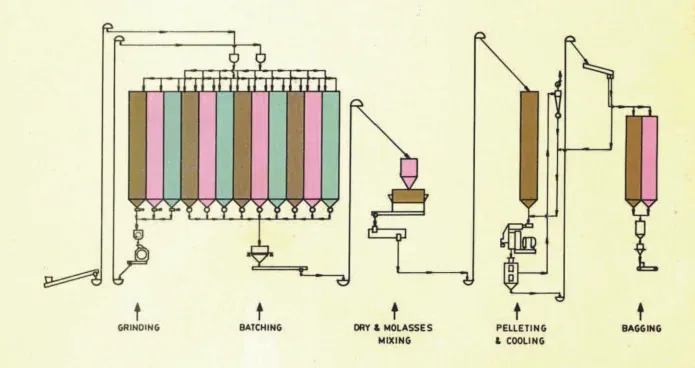
Plant configurations
- Plants without storage silos – ingredients stored in a raw material godown; manual batching; 50 TPD and 100 TPD.
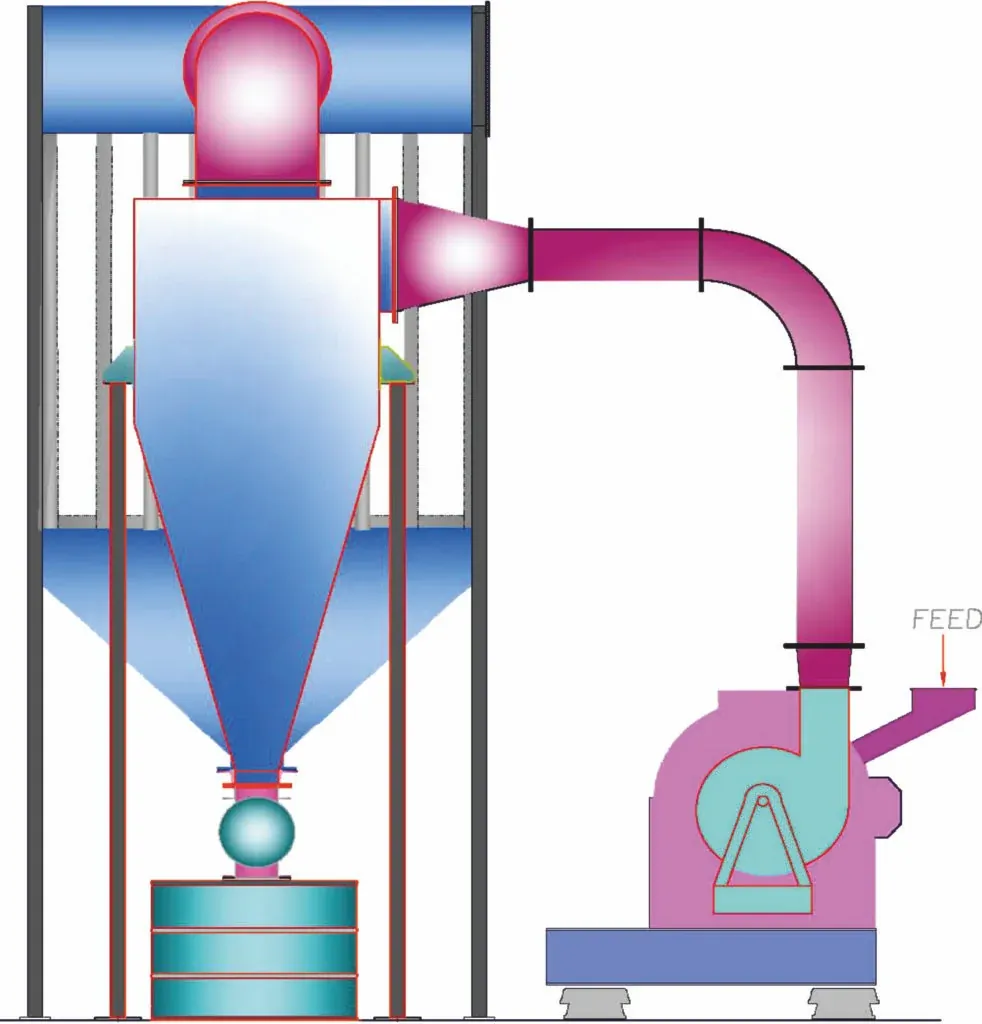
- Automatic plants with storage silos and batch weigher – modular, vertical and compact; number of silos matched to the number of ingredients; automatic (or manual) pre-weighing; aspiration for dust-free operation; usually 100 TPD, with 200 TPD plants available.
Key equipment
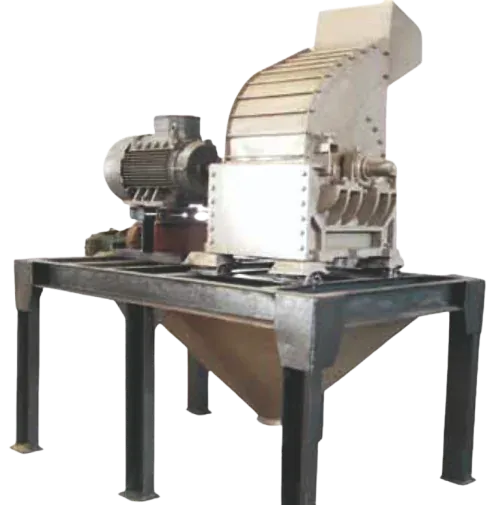
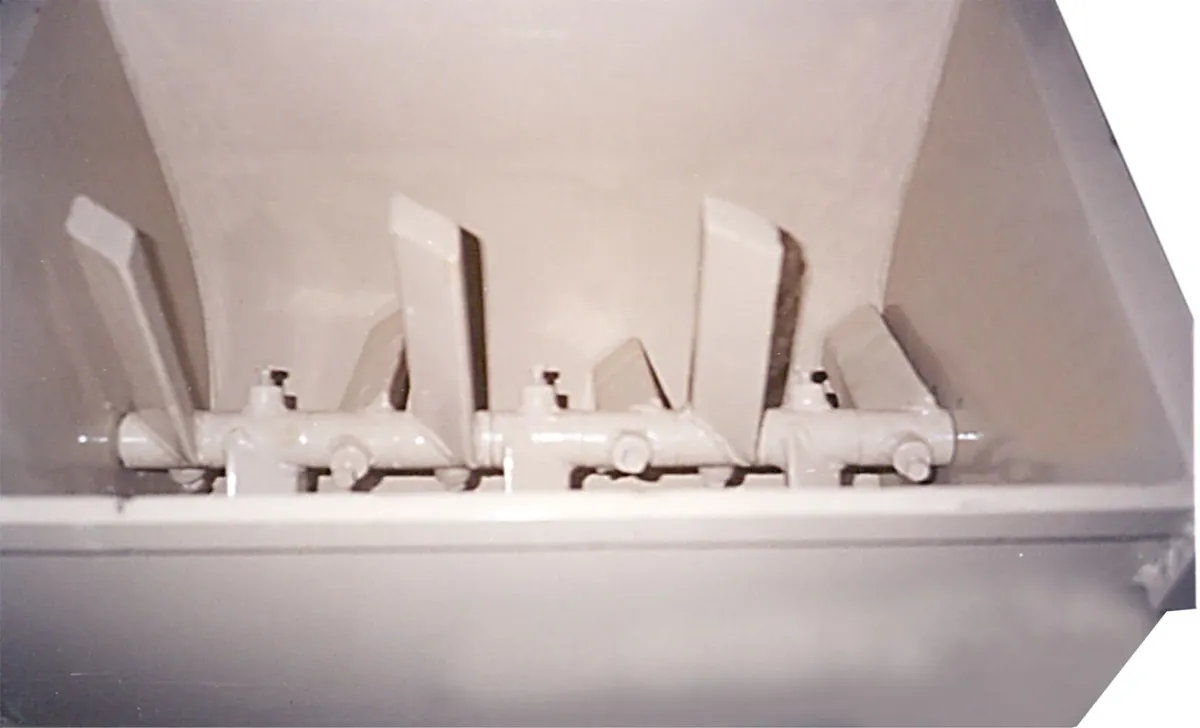
- Miracle Mill hammer mills for grinding grains, cakes and ingredients
- Batch weighers and silos
- Horizontal mixers that add molasses directly, without pre-heating, in 6–8 minutes
- Pellet mills with conditioners, coolers and crumblers
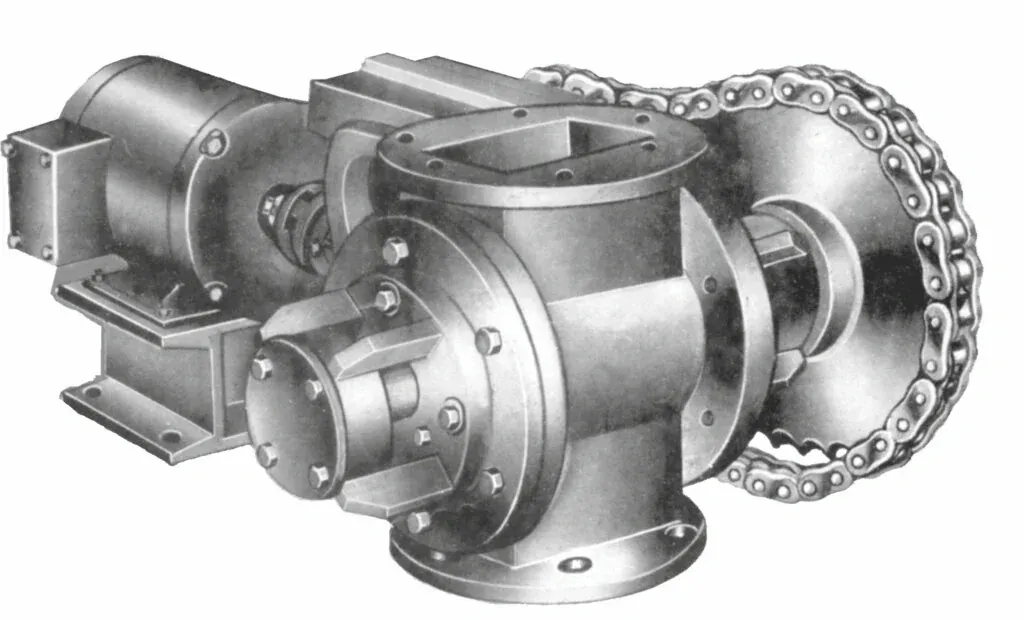
- Bucket elevators, screw conveyors and rotary valves
- Bagging and stitching
Feed grinding tips
Grinding improves digestibility, mixing and pelletability. Hammer mills are most efficient on dry, low-fat ingredients; oily cakes may need a different screen or hammer pattern. Rotary valves on feed lines are rated on cattle feed at 0.6 g/cc bulk density — a useful reference for sizing conveying.
Shrimp and fish feed
For aquaculture, extruded and pelleted feeds are produced in dedicated aqua feed plants.
Frequently Asked Questions
What capacities do you offer?
Standard feed plants are 50 TPD and 100 TPD, with automatic plants up to 200 TPD.
Do you supply pellet mills?
Pellet mills are supplied as part of complete feed plants, together with conditioning, cooling and crumbling equipment.